BasketValidationResult Class
The BasketValidationResult class represents the outcome of a basket validation operation. It provides a standardized way to indicate whether the validation was successful and, in case of failure, includes a message explaining why the validation failed.
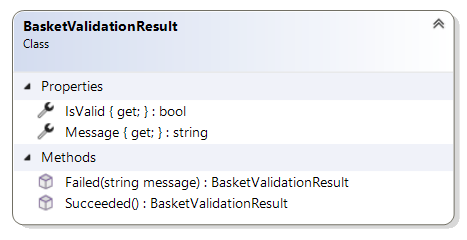
Properties
IsValid
public bool IsValid { get; }
A boolean value indicating whether the basket passed validation. This property is read-only and is set through the factory methods.
Message
public string? Message { get; }
A string containing the validation message. This property is typically used to provide a user-friendly explanation when validation fails. It is nullable and is null for successful validations. This property is read-only and is set through the factory method.
Methods
Succeeded
public static BasketValidationResult Succeeded()
Creates a successful basket validation result. Use this method when the basket passes all validation checks.
Returns
A BasketValidationResult instance with IsValid set to true and no message.
Failed
public static BasketValidationResult Failed(string message)
Creates a failed basket validation result with a specified error message. Use this method when the basket fails validation checks.
Note
Use Api.GetSanaText to get the localized text for the message.
Parameters
message: A string explaining why the validation failed. This message should be user-friendly as it may be displayed to the end user.
Returns
A BasketValidationResult instance with IsValid set to false and the specified error message.
Example Usage
Here's an example of using BasketValidationResult in a validation rule:
public class MaxItemQuantityValidator : BasketValidationExtension
{
    public override ApplicableCheckoutProcesses AppliesTo =>
        ApplicableCheckoutProcesses.Order;

    public override Task<BasketValidationResult> ValidateAsync(BasketValidationContext context)
    {
        if (context.Account.Type == AccountType.Customer)
            return Task.FromResult(BasketValidationResult.Failed("Customer accounts cannot place orders."));

        return Task.FromResult(BasketValidationResult.Succeeded());
    }
}